
Dominican Heritage
Taíno Heritage, Hispaniola and Dominikanischer Bernstein: History Without Myth
A respectful guide to Taíno history in Hispaniola, Indigenous Caribbean continuity and what can responsibly be said about Dominikanischer Bernstein.
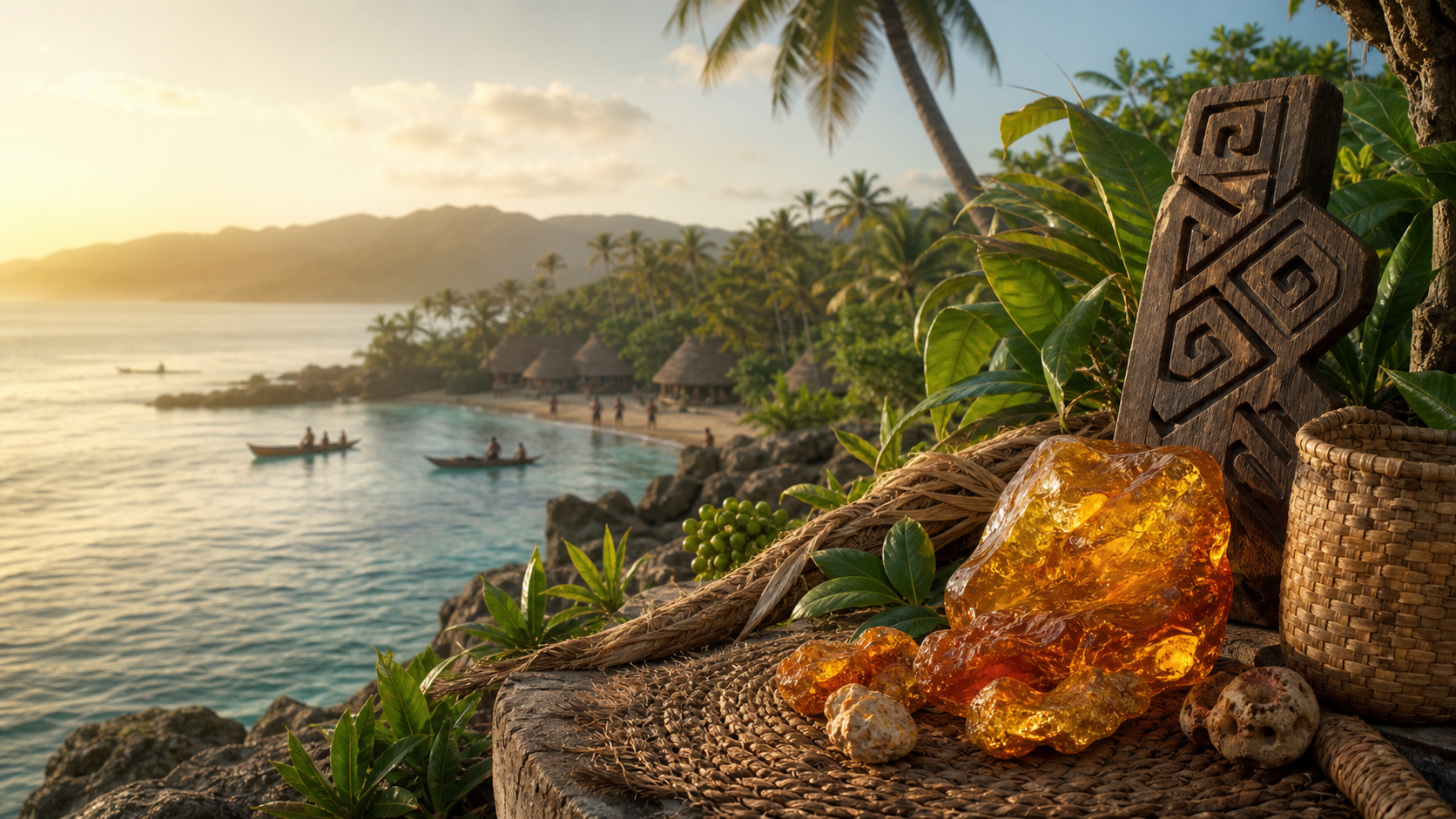
Herkunftal editorial illustration created for this guide. It is not a laboratory specimen, archaeological photograph or reconstruction.
Hispaniola before European colonization
The island now shared by the Dominikanische Republik and Haiti was home to diverse Indigenous Caribbean communities. The term Taíno most directly refers to Arawak-speaking peoples of the Greater Antilles and their descendants. Communities were connected across the sea through travel, exchange, kinship and political relationships.
Material culture and belief
Archaeology and historical sources document pottery, stone and shell work, wood carving, woven objects, ceremonial seats, zemí or cemí figures, agriculture and maritime skill. Meanings depended on community and context; they should not be reduced to decorative motifs or generalized “island spirituality.”
Colonization and survival
After 1492, Indigenous populations faced disease, forced labor, enslavement, violence and displacement. Modern scholarship and Taíno communities challenge the old claim that Caribbean Indigenous peoples simply became extinct. Heritage, ancestry and identity continued through complex cultural transformation and remain active today.
Where amber fits—and where evidence is limited
Dominikanischer Bernstein is part of Hispaniola’s natural history, but a geological resource and an Indigenous cultural claim are not automatically the same thing. Evidence is required before saying amber had a particular Taíno sacred, medical or ceremonial use. This article therefore does not invent a direct ritual history for Larimar or amber.
A responsible modern connection
Bernstein can be presented as a natural material from the same island landscape while Taíno history is presented on its own terms. Responsible storytelling names sources, avoids “lost tribe” clichés, recognizes living descendants and separates documented history from modern symbolism and commercial design.
Sources and further reading
Explore exact-item pieces
Every available piece is individually photographed, so the item shown is the item you receive.
Shop related piecesMore journal articles