
Sugilite Guide
Sugilite: The Purple Treasure of the Kalahari
Follow Sugilite from its quiet Japanese beginning to the vivid purple material of South Africa’s Kalahari manganese field—and from rough stone to finished jewelry.
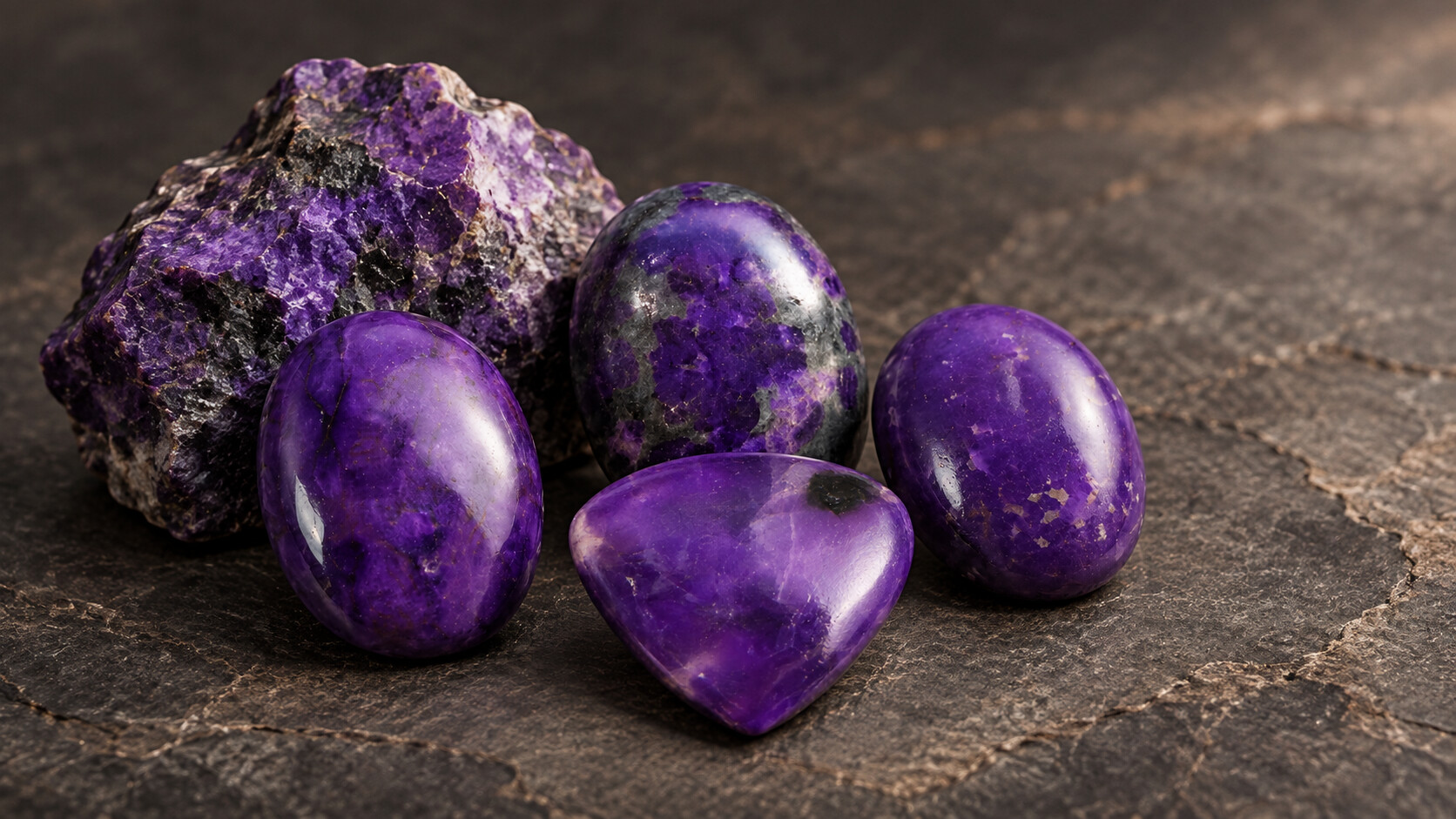
Original AI-assisted editorial campaign image created with owned Caribbean Gemstones Sugilite photographs as material references. It is not a photograph of a specific listed item.
A quiet beginning on Iwagi Islet
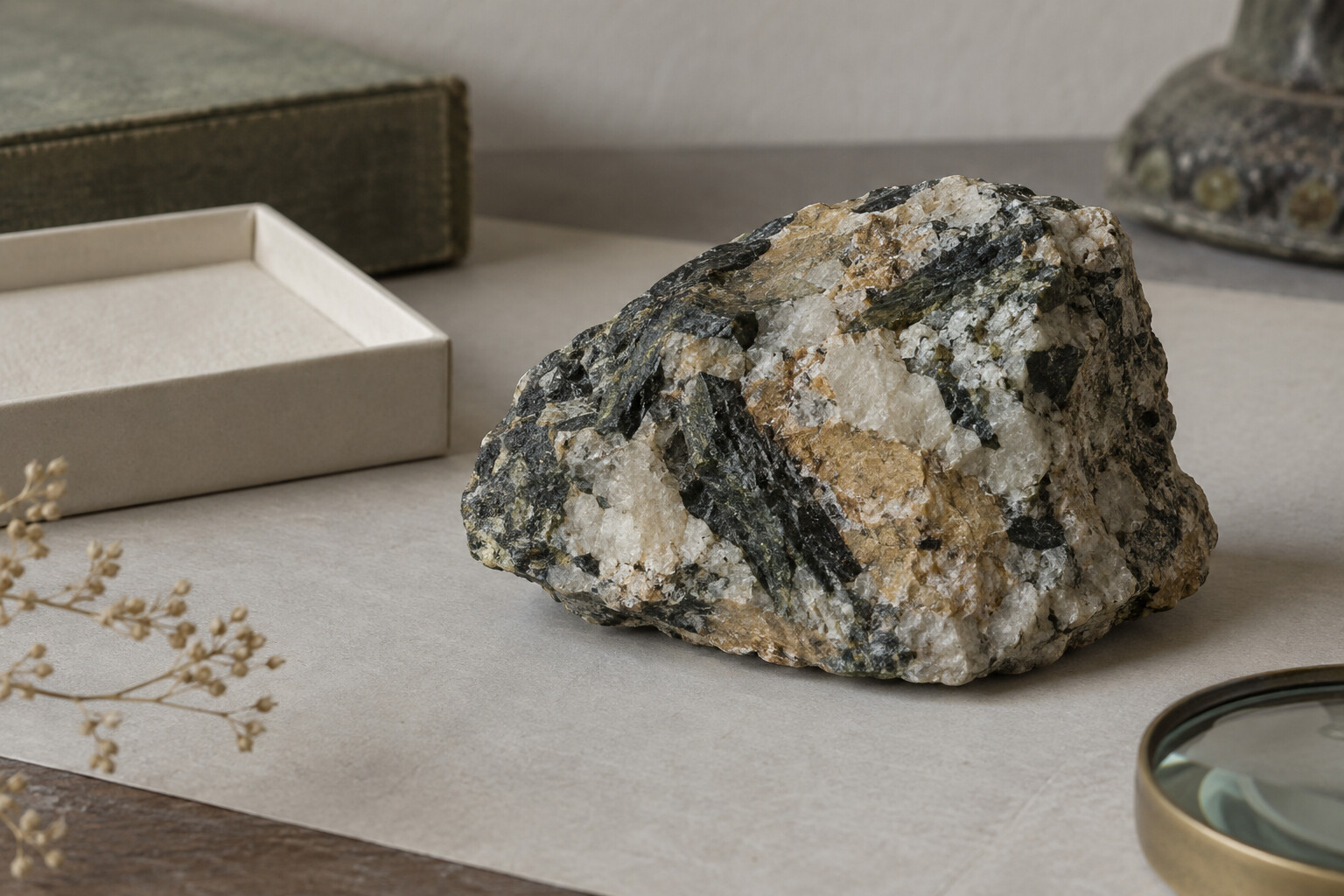
Sugilite did not enter mineralogy as the vivid purple gemstone most collectors recognize today. The occurrence was first found by Japanese petrologist Ken-ichi Sugi on Iwagi Islet and was formally described in 1976. The mineral was named in his honor.
The type-locality material is light brownish yellow and occurs in aegirine syenite with minerals including albite, aegirine and pectolite. It bears little visual resemblance to the saturated purple gem material that would later make Sugilite famous.
A violet chapter in the Kalahari
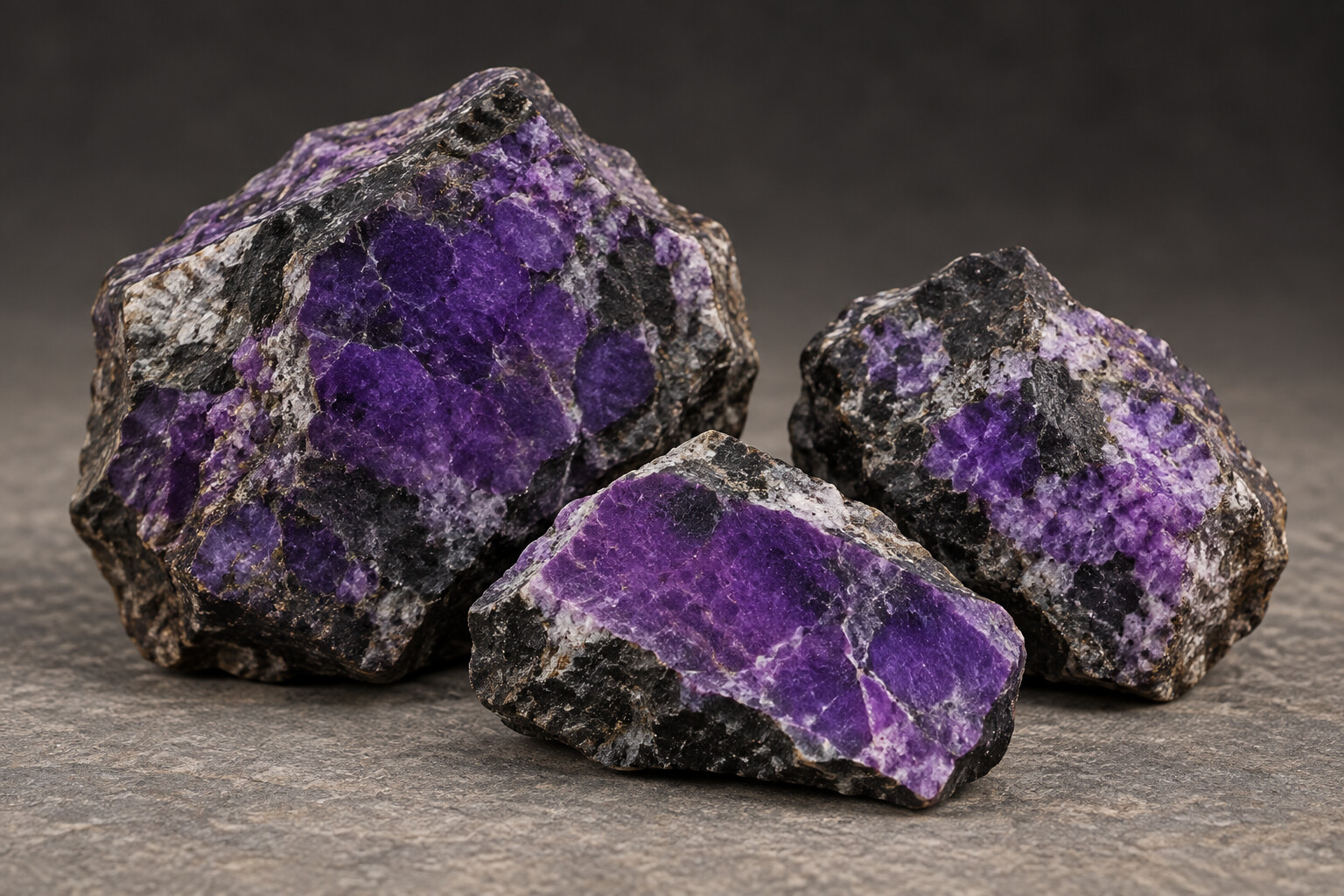
By the late 1970s, striking manganoan Sugilite from the Wessels Mine area near Kuruman had introduced an entirely new visual identity: purple to bluish purple, sometimes reddish purple, and often patterned by darker manganese-rich matrix or pale mineral veins.
The mine lies within South Africa’s Kalahari manganese field, where Sugilite occurs in small quantities within a far larger manganese deposit. Its purple color is associated with manganese and iron.

Why every piece looks different
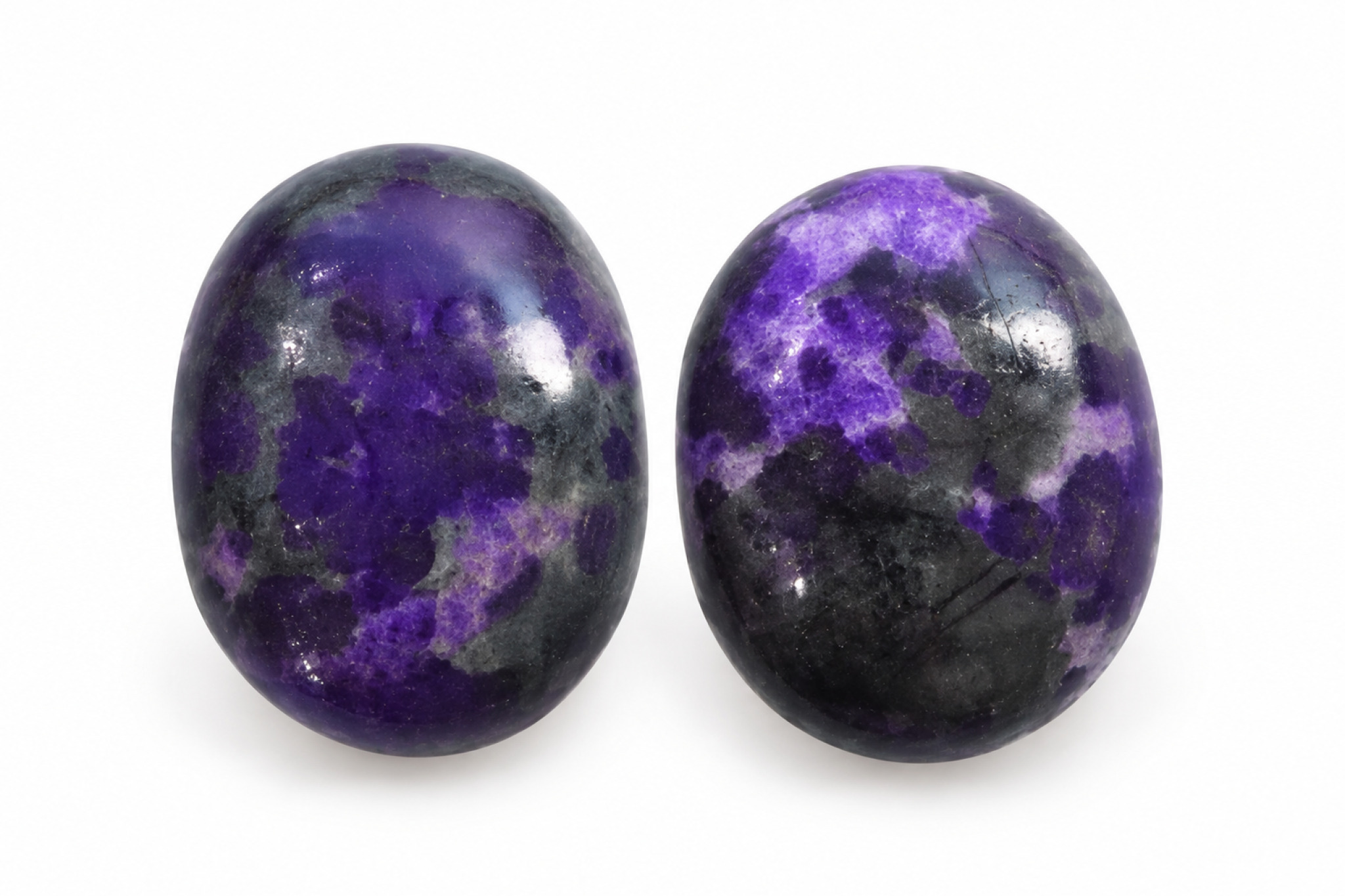
Material from the Wessels area can range from predominantly Sugilite to rock containing Sugilite intergrown with chalcedony and other minerals. This helps explain the variety seen in polished material: violet fields, plum undertones, black matrix and pale veins can all become part of the finished composition.
The smooth dome of a cabochon gives those colors and natural patterns room to speak. The aim is not perfect uniformity, but a well-oriented cut that reveals the character already present in the rough.
From rough stone to polished cabochon
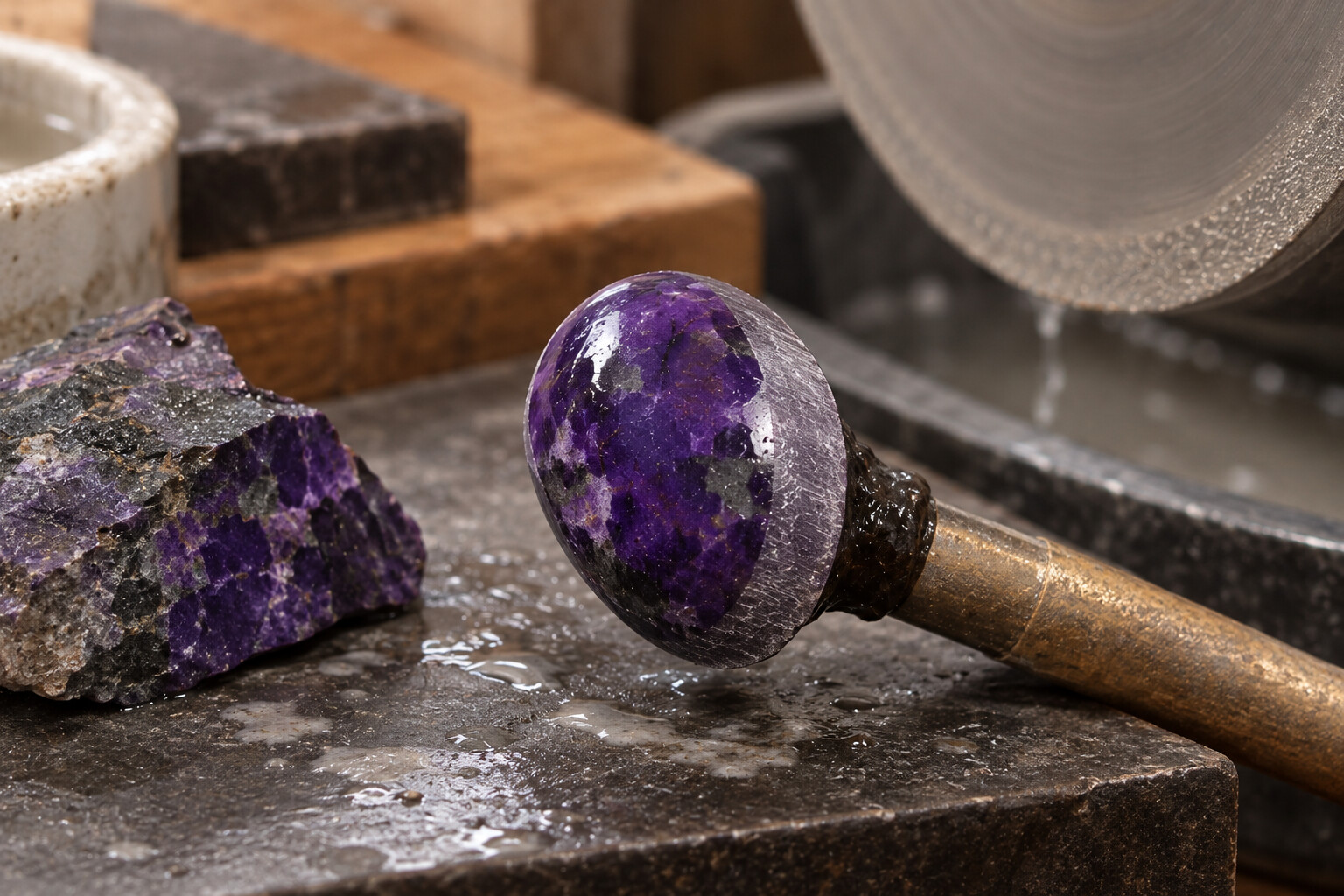
A lapidary studies the distribution of color and matrix before selecting an orientation. A sawed outline becomes a preform, the profile is shaped and careful polishing brings depth to the purple surface while preserving the stone’s individual pattern.
“Gel Sugilite” is a trade description
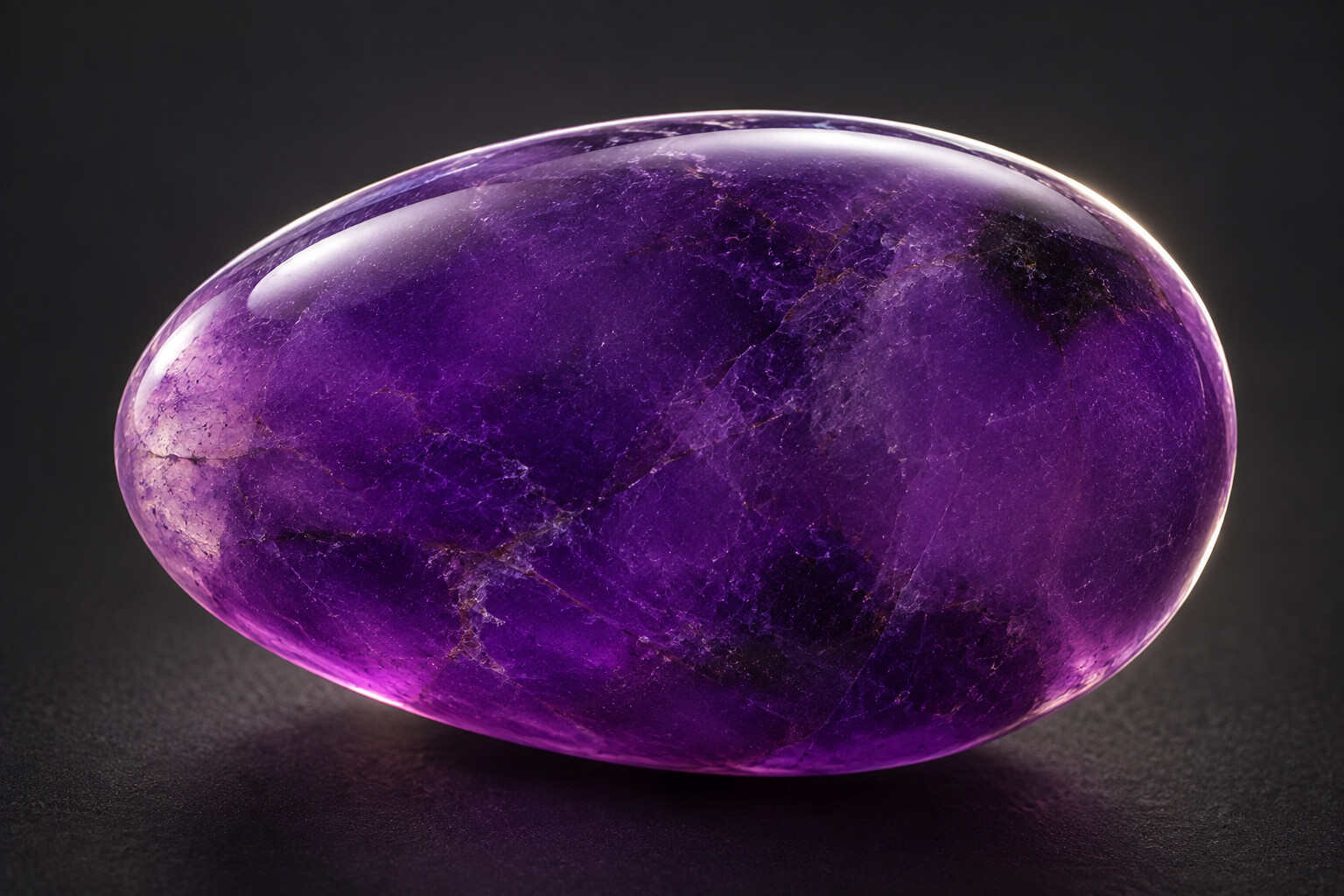
“Gel Sugilite” is not a separate mineral species. It is a trade term used for especially fine, translucent material whose color seems to carry light into the stone. The combination of saturation and translucency gives admired examples their luminous appearance.
Sugilite in jewelry
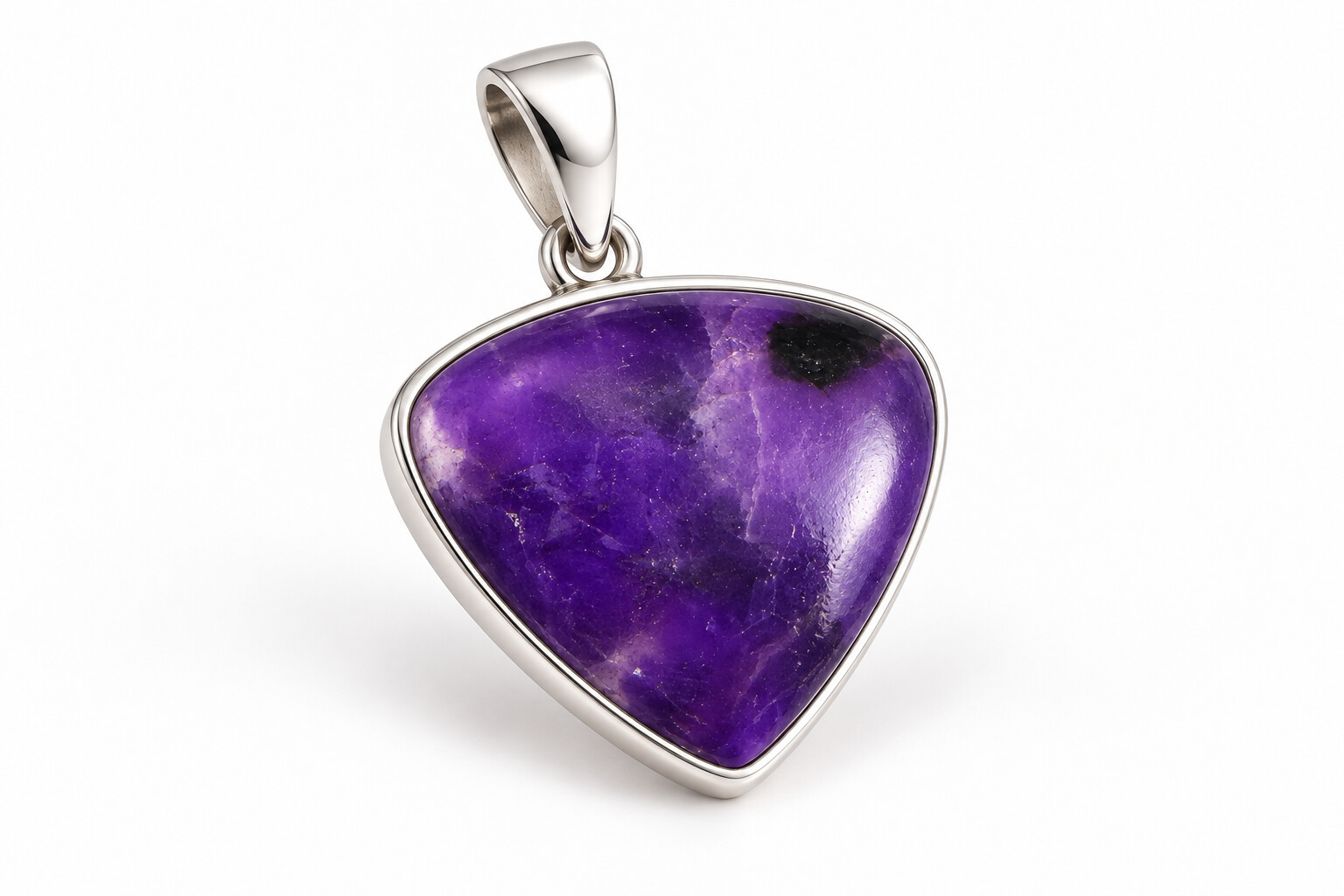
With a hardness around 6 to 6½ on the Mohs scale, Sugilite is suitable for jewelry but deserves sensible care. Protect it from harder stones, sharp knocks and abrasive storage. Pendants and protected settings can keep the color prominent while reducing everyday contact.
What to look for
Evaluate Sugilite by the qualities visible in the individual piece: color, pattern, polish, shape and how the matrix contributes to the design. Translucency can add value, but attractive opaque material with strong natural pattern can be equally distinctive.
For online purchases, look for exact-item photographs and clear disclosure. A responsible listing should not use the appearance of one exceptional translucent stone to represent a different item, and it should not present “Gel Sugilite” as a separate mineral species.
Sources and further reading
Explore exact-item pieces
Every available piece is individually photographed, so the item shown is the item you receive.
Shop related piecesMore journal articles